Applied AI · How we work
Our growth hacking strategy is so good that we can and want to share it
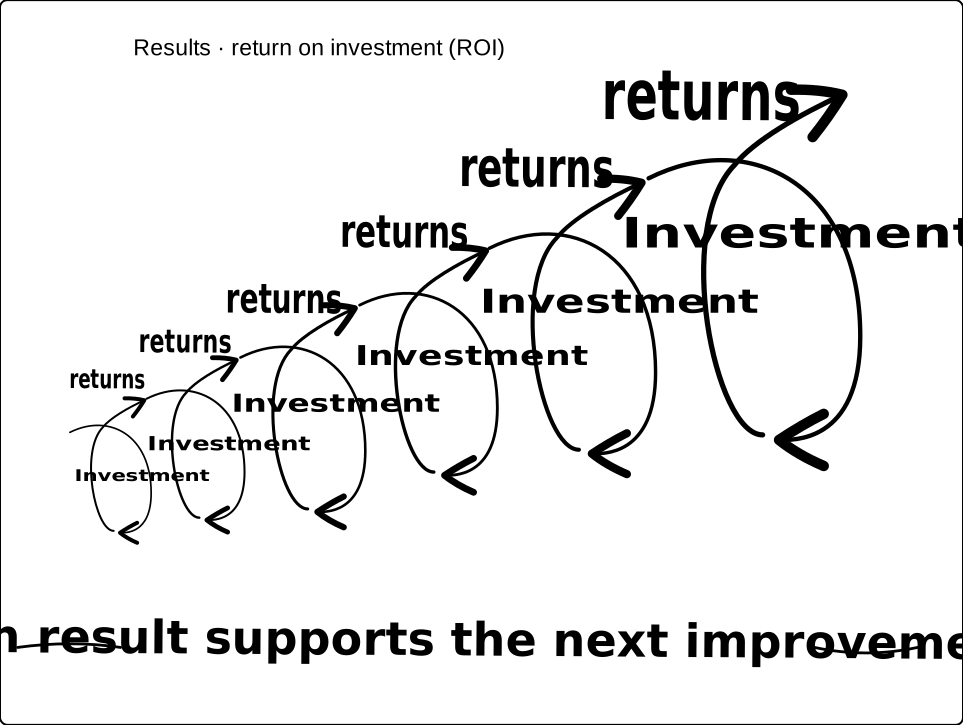
We want Idoneos to grow by helping its clients grow. That may sound like a statement of good intentions, but we have something more specific in mind: building a relationship in which the result a business achieves gives it reasons and resources to continue, as well as reasons to recommend us. Our interest in growing therefore leads us to focus on benefits the business can recognise and verify. The experience we want to create could be summed up like this:
“We started with something small, recovered the investment and are now paying for the next improvement with what the first one produced. This pays for itself!”
That is the effect we aim to create through our AI adoption services. We call it our growth hacking strategy: seeking to make the value a client gains support further work and new recommendations. Sharing it openly makes our interest in the client’s success clear. The mechanism works when both parties benefit.
The first investment should open the way
Consider a business that receives enquiries, prepares quotes and then needs to follow them up. To resume each conversation, someone has to reconstruct what was requested, what was offered and what remains outstanding. While those details are being retrieved, more enquiries arrive. The team keeps working, but some opportunities may be lost because a reply does not arrive in time.
We have a concrete purpose: making better use of the sales opportunities the business already generates. We also have a difficulty: the information needed to act is scattered. The first question is what transformation would turn those records into timely follow-up, and whether its benefit would justify the effort of making it part of everyday work.
An AI application could connect the enquiries, quotes and available history to prepare a proposed follow-up. A person would review whether the context had been interpreted correctly and decide what to send. Replies and completed sales would then be recorded. This is a hypothetical example: it lets us work through the mechanism and identify what would need to be verified.
The usefulness of that assistance depends on resolving a difficulty in the process. Preparing a message may be a necessary step; the purpose is to help resume a sales opportunity. The drawing shows what the system prepares, where a person makes the decision and what happens afterwards.

AI bootstrap and the capacity to fund the next step
We call AI bootstrap an AI adoption cycle in which we aim for each initiative to recover its investment within a sufficiently short period and generate a surplus to fund the next one. The first improvement requires an initial investment. From that point, the aim is for results to expand the capacity to move forward.
Think of the seeds we save for another planting. Part of one cycle’s output becomes a resource for the next. We can seek a similar relationship with business improvements: once costs are covered and the investment is recovered, part of the benefit can be reinvested. Growth depends both on producing that surplus and on deciding what to do with it.
Let us return to the quotes. If follow-up helps secure additional sales, those sales will have costs and leave a margin. That margin must provide the resources to sustain the solution, recover the investment and, if enough remains, fund another improvement. Each of those relationships matters: increasing activity and having money available to reinvest are different outcomes.
The spiral at the start of this article represents that possibility of accumulation: returning to the work with more knowledge and, when results allow, more resources. Each turn builds on what the previous one achieved. The following cycle shows where the result is measured and where reinvestment is decided.

Results therefore set the pace. If an improvement takes longer than expected or produces less benefit, we need to understand which assumption failed: how much work there was, which difficulty we resolved, how the assistance was adopted or which costs we overlooked. Adjusting, narrowing the scope or stopping also means using what we have learned to make a better decision.
What it means for an improvement to pay for itself
The expression “pays for itself” deserves a closer look. We may mean that the benefit covers operating costs, that it also repays the initial investment, or that it leaves a surplus for further progress. These are three distinct conditions. To complete the AI bootstrap cycle, we seek all three and need to know the timeframe in which we expect to achieve them.
Before starting, we agree on what to measure and what to compare it with. We consider implementation, tools, support and the effort involved in using the solution. For follow-up, we record which opportunities were resumed and which sales were completed. When comparing periods, we examine changes in demand, prices and sales activity that could also explain the result. The additional margin attributable to the improvement, after operating costs, lets us assess recovery of the investment.
Freed-up time also has value. Its economic effect depends on what we can do with it: handling more orders, reducing overtime or avoiding an external contractor have different consequences. A calmer team or better service would also be valuable outcomes. To fund the next investment, we need to identify which part of that value actually becomes available resources.
From the client’s benefit to Idoneos’s growth
So far, we have followed a cycle within the business: invest, improve the work, verify the benefit and decide whether to reinvest. Our growth strategy adds a relationship between that result and the conversations a person may have with others.
When a client understands how much they invested, what changed and what they gained, they have a concrete experience to share. If they can also keep improving their business with part of what the first initiative produced, they have an economic reason to continue. That is the continuity we want to build: for the usefulness of the service to support the decision to maintain and extend it.
We would like a client speaking with a colleague to be able to explain the process just as clearly: “They helped me choose where to start. We did the work, measured the result and can now take the next step with what the previous one produced.” That is a conversation we hope to earn through our work and its results.
This connects our interests. The client gains an improvement that justifies the investment and opens new possibilities. Idoneos can continue working with them and reach other businesses through their recommendation. The person making a recommendation also puts their own credibility at stake: the clearer and more verifiable the result, the more information they have to decide whether it is worth sharing.

Why we want to share our strategy
We can share our strategy because it makes our interest explicit: for the client to gain a benefit that justifies continuing and earns a recommendation. We want them to be able to explain what changed in their business, what it cost to achieve and which possibilities the result opened.